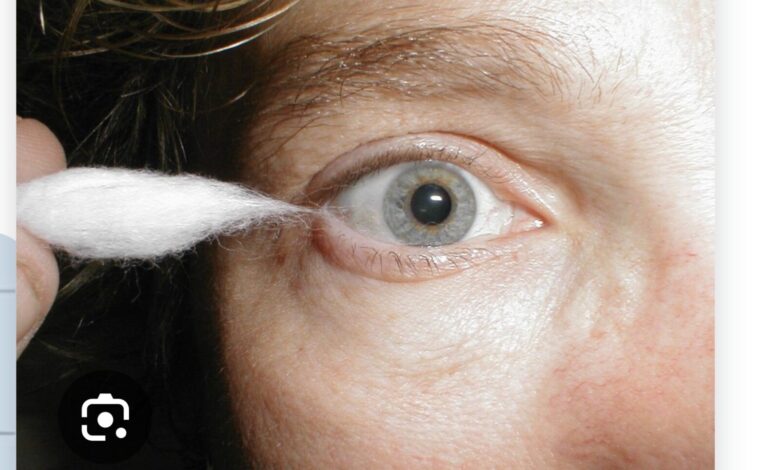
There is an important, but simple, diagnostic procedure doctors do frequently but don’t talk about very much. This procedure, called the corneal reflex test, is significant for evaluating comatose patients in the ICU. The corneal reflex test is done at the bedside and is used to determine how deeply comatose the patient is. It’s done by taking a wisp of cotton and touching it against the cornea of either eye. The cornea is the domed, transparent membrane that overlies the iris and pupil of the eye. It is rife with sensory nerve endings that make it one of the most sensitive parts of the body. If your cornea has been scratched, or a foreign body has gotten in your eye, you remember how painful that was.
When the cornea is touched by the cotton, the response to the touch is what doctors want to see. Reflex blinking after touching the cornea indicates the brain is still capable of receiving and reacting to noxious stimuli. The cotton triggers nerve endings in the cornea and if nerve pathways to the brain are intact, the eye blinks or the patient flinches.
The corneal reflex is done mostly by neurologists and critical care specialists who are the physicians caring for critically ill patients in the ICU. The reflex gives indication to the likelihood the patient will awake from the coma. This test is also an indicator of brain death and is a good gauge of whether the patient is likely to recover.
Researchers in South Korea have studied the corneal reflex in depth and have established three responses to the stimulus. Plus they have determined the significance of each response for a comatose patient. The three reactions are intact, diminished, or absent.
An intact reaction means the eyelids blink briskly. This is a good indication the patient is likely
to recover.
A diminished reaction means the eyelids blink slowly or the eye closes incompletely. These
patients have a guarded prognosis.
An absent reaction means there is no movement of the eyelids. In these patients there’s a high
percentage chance of death within 24 hours.
With an absent corneal reflex, the patient has a 5.48 times higher odds of death and a mortality of 70.7% within 24 hours. “Absence of the reflex may strongly support a prediction of imminent death, but preservation of the reflex does not rule it out….Loss of the corneal reflex may reflect progressive deterioration of brain stem function as part of the natural dying process….it is a marker for brain death.”
The corneal reflex is a confirmatory step physicians use to help families understand the depth and seriousness of their loved one’s illness. “Loss of corneal reflex may predict death within 24 hours….Identifying these signs carries a 95% probability of death within 48 hours.”
For such a simple procedure to have such significant meaning is quite remarkable. The doctor knows with certainty if he touches the cornea with a cotton swab and the patient fails to respond, it is almost certain death is imminent.
Reference: O’Mary L. A Simple Test Could Predict a Patient’s Final 24 Hours. Medscape 2026 April 14.