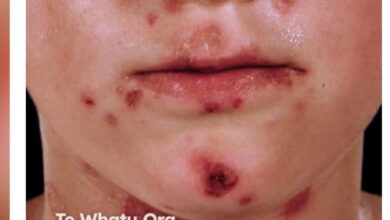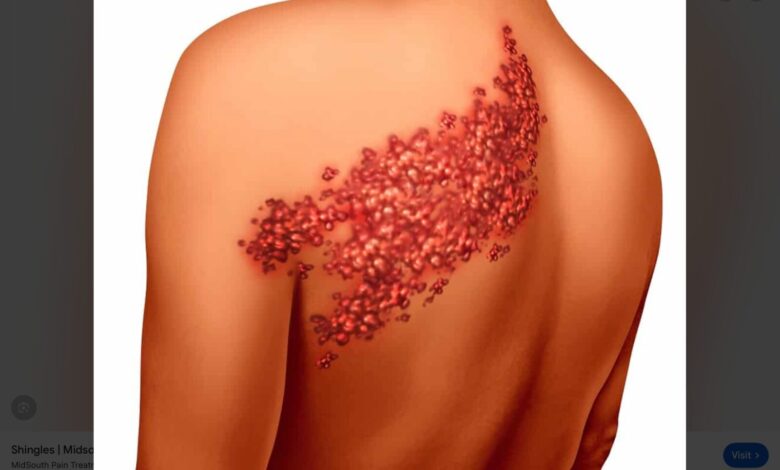
Surprisingly, I have not written a post about Herpes Zoster, AKA shingles. I’ve written about the two shingles vaccines available, but not about the disease itself. It’s a disease that affects 33% of the population, and in most cases it’s characteristic appearance makes it easy for physicians to diagnose.
Varicella-zoster virus is a member of the herpesvirus family. It is the virus that causes chicken pox, scientifically known as Varicella. Chicken pox is a highly contagious disease. After the clinical illness has resolved, the virus goes dormant and lives in the ganglia (cluster of nerve cells) at the origin of the spinal and cranial nerve roots. The dormant virus can live in any nerve root ganglion. For reasons unknown to me, later in life, the varicella-zoster virus reactivates. When reactivation occurs, the rash of shingles erupts in the skin innervated by the affected nerve root(s). The physician’s knowledge of neuroanatomy, a course taken in the freshman year of medical school, makes it easy for doctors to recognize shingles.
Shingles begins with a prodromal set of symptoms—headache, malaise, low-grade fever. After a few days, the burning, itching, painful rash develops in the skin in the distribution of the affected nerve. It is a red, raised, blistery (vesicular) rash, that resolves in 2-4 weeks. During that time, the vesicles dry up and scab over. This, plus the lessening of the pain are indicators of resolution of the disease. When the vesicles all scab over and dry up, the clinical course of shingles is complete.
In about 10% to 18% of shingles cases, patients are left with chronic pain in the area of the rash. The rash of shingles is gone, but the pain remains. It’s called Post-herpetic Neuralgia, and it’s very painful, especially if it’s located on the face or head. It is then called Trigeminal Neuralgia and is known to cause extreme pain.
Acute Shingles is treatable and many cases are suppressed by antiviral drugs. The three antivirals used are acyclovir (Zovirax), valycyclovir (Valtrex), and famcyclovir (Famvir). Doses used for shingles are higher than those used against other herpes viruses. The drug is taken for 5-7 days. Pain control is achieved by the use of acetaminophen or ibuprofen. For particularly bad cases with a lot of vesicles and severe inflammation, I prescribed a short course of corticosteroids for their anti-inflammatory effect. Steroids helped relieve pain and inflammation.
Post-herpetic neuralgia can be a challenge to treat. There is nothing special to use for it but the foundation of treatment is gabapentin (Neurontin) or pregabalin (Lyrica) supplemented by an SSRI like duoloxetine (Cymbalta) or fluoxetine (Prozac). Tri-cyclic antidepressants like amitriptyline are helpful for pain, too. Untreated, shingles can last 4-6 weeks. Treating it aggressively shortens the course to 2-4 weeks. Unfortunately, aggressive treatment with steroids does not prevent post-herpetic neuralgia.
The best treatment for shingles is to get vaccinated. The vaccines are intended to prevent developing shingles in the first place. Two vaccines exist. They are:
Zostavax—a live virus vaccine
Shingrix—a recombinant zoster vaccine
The Advisory Committee for Immunization Practices (ACIP) recommends two shots of Shingrix given 2-6 months apart. If you have been given Zostavax in the past, you still need to take Shingrix as is recommended. Medicare pays for Shingrix so there’s no reason not to get it.
Please check DrGOpines.com to read about Zostavax and Shingrix. The title is “Shingles Vaccines: Do they work?” It’s worth your time.
References: Jones K, Keating M, Hansel M. Herpes Zoster and Post Herpetic Neuralgia: Common Questions and Answers. Am Fam Phys 2026 August;114(2):
164-172.