

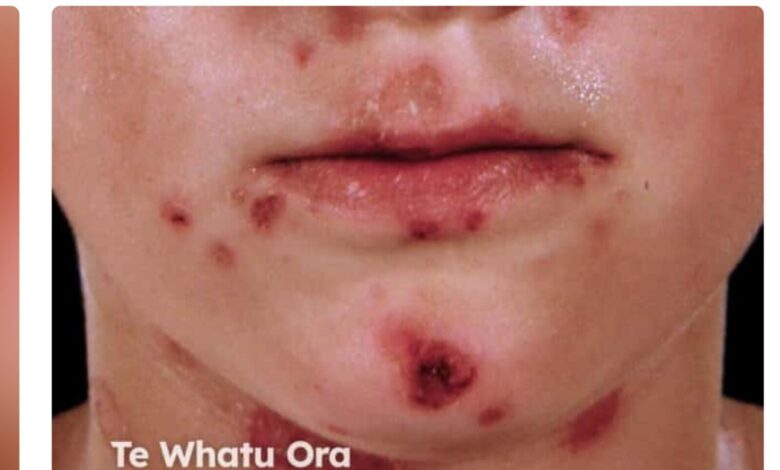
What is Impetigo? It’s a bacterial infection of the skin caused by either group A streptococcus (Strep) or Staphylococcus aureus (Staph). It can also be caused by methicillin-resistant Staphylococcus aureus (MRSA), the bacteria that is so resistant to antibiotic treatment. Impetigo affects the surface layer of the skin most often in children ages 2-5. Children of school age, adults, and the elderly are all susceptible. Adults aren’t as susceptible to impetigo as youngsters because of differences in hygiene practices. Toddlers put their hands and other things in their mouths, and other unclean places all the time. I saw impetigo a lot in Indiana because of the hot, humid environment of the Midwest. The heat, humidity, and perspiration are a perfect culture medium for bacterial growth and skin infections.
Staph and Strep bacteria, in less virulent forms, live on our skin all the time. Bathing, showering, and hand-washing clear the skin surface of these bacteria and keep the chances of infection in check. However, injury to the skin surface (abrasion, laceration, etc.) allows skin surface bacteria to move from the skin to the deeper tissues. The surface bacteria thrive because of the disrupted skin and multiply, cause inflammation and infection, and damage the skin surface.
Poor hygiene, crowded living conditions, hot humid weather, poor nutrition, and diabetes contribute to impetigo. It is a disease of recognition meaning you see a rash and recognize it as impetigo. It begins with red bumps in the skin that enlarge and leak a yellow, granular, crusty fluid. It is sometimes scaly red skin with some scab-like areas within it. Removing the scab, or crust, reveals red, oozy inflamed skin. The most common location for impetigo is on exposed skin, by the nose or mouth, and satellite lesions are common.
Diagnosis is usually made by recognizing the lesions on the patient, but culture is easy to do if the diagnosis is uncertain. The presence of Satellite (distant) lesions helps confirm the diagnosis.
Treatment is obviously antibiotics administered either topically, as a cream or ointment, or orally. Studies have concluded that topical antibiotics are just as effective if not more so than oral antibiotics. Mupirocin 2% ointment is the topical antibiotic of choice. More widespread infection is better treated with oral antibiotics. The choice of antibiotic is often determined by culture results and lab testing of various antibiotics against the bacteria—called sensitivity testing. Dicloxacillin, cephalexin, and amoxicillin-clavulanate are used for Staph or Strep. For MRSA, doxycycline, clindamycin, and SMZ-TMP are drugs of choice. Careful cleansing of the lesions with antiseptics is helpful as well.
Impetigo can progress to cellulitis (deeper tissue infection) or even can form an abscess. This occurs only in extreme circumstances. However, Streptococcal infections can progress to rheumatic fever and glomerulonephritis.
Impetigo is highly contagious through hand transmission but can also be transmitted by pets, toys, and other personal-use items. Hand washing and good personal hygiene prevent new lesions and help antibiotics work more effectively on active lesions.
Reference: Trang DT, Buck EC, Schoenberg DT. Impetigo: Rapid Evidence Review. Am Fam Phys 2026 Feb;113(2):175-180.




I got it from the wrestling mats in high school. I remember several shots in the butt
I had it in grade school, too.