Vasectomy is the male counterpart of tubal ligation. In both genders, there is a tube through which the gametes, or reproductive/sex cells pass on their way to becoming fertilized. In the male gender the tube is called the vas deferens and it is sperm, or spermatozoa, that pass through the vas on the way to fertilizing the ovum in the uterine cavity and implant in the inner lining of the uterus.
In women, the reproductive tube is called called the Fallopian tube. It connects to the upper corners of the uterine cavity, and it’s far end opens into the abdominal cavity. The open end of the tube has numerous finger-like projections. Their wave motion draws the eggs, produced by the nearby ovaries, into the tube. The Fallopian tubes move the eggs, or ova, into the uterine cavity to become fertilized by sperm.
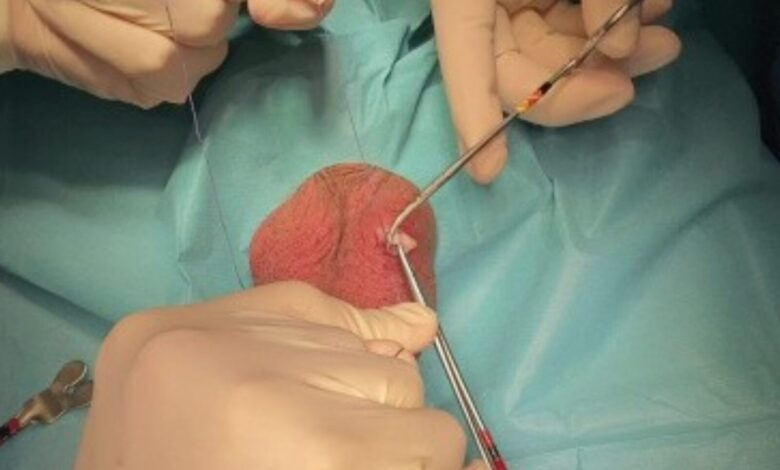
Sterility occurs when the vas deferens, or the Fallopian tubes, are cut and the ends tied so the sex cells are unable to transfer their particular gamete to the uterine cavity, totally disrupting fertilization. Vasectomy is the procedure done to achieve male sterility. In the procedure, the vas deferens is located through a small skin incision in the scrotum. Once found, the vas is cut and the open ends are cauterized. The cut ends are folded back and ligated (tied off) leaving a gap of an inch that further blocks the path of the sperm to fertilization. That’s it! A vasectomy has been done.
For several reasons, vasectomy is a safer, more desirable, and a more reliable procedure than a tubal ligation. It is non-invasive and done under local anesthetic. Plus, sterility can be confirmed. Eight weeks or more after vasectomy, a semen analysis can be done to check for the absence of sperm. If there are 100,000 or fewer sperm that are non-motile, ie. they don’t move, they are most likely dead and sterility is confirmed. With tubal ligation, no confirmatory test or procedure exists, other than a hysterosalpingogram, an X-ray test where contrast Is injected into the uterine cavity and into the tubes to confirm the Fallopian tubes have been severed and sterility is confirmed. It’s a far more difficult test than a sperm count. Tubal ligations are invasive requiring general anesthesia and the entering of the abdominal cavity.
There has long been concern that vasectomy can lead to prostate cancer, cardiovascular disease, or kidney stones. It has also been blamed for sexual dysfunction and changes in ejaculation. No causal link between vasectomy and prostate cancer, cardiovascular disease, kidney stones has ever been established. Neither has there been a link to sexual dysfunction, and the only difference in ejaculation is there is no sperm in the ejaculate (fluid).
The American Urological Association presents evidence that vasectomy has a higher success rate than tubal ligation. Pregnancy rates of 1.1% or less for 2-5 years post-procedure are recorded for vasectomy. Tubal ligation has a 2.9% pregnancy rate for the first year. With vasectomy, sterility is not immediate. Eight weeks and a negative sperm count are required before a vasectomy is declared a success. Reversal of a vasectomy is possible, but it results in pregnancy only 50% of the time. A man should never have a vasectomy with the idea he may one day want it reversed.
Well, then, vasectomy wins over tubal ligation. It’s non invasive, easier to do, requires only local anesthesia, and can be checked for sterility. The hard part is getting a man to agree to have it done. That should be a no-brainer, but a lot of men, myself included, are reluctant.
References: Arnold JJ, Green B, Hamal C. Vasectomy: Guidelines from the American, Urological Association. Am Fam Phys 2026 September; 114(3):316-318.