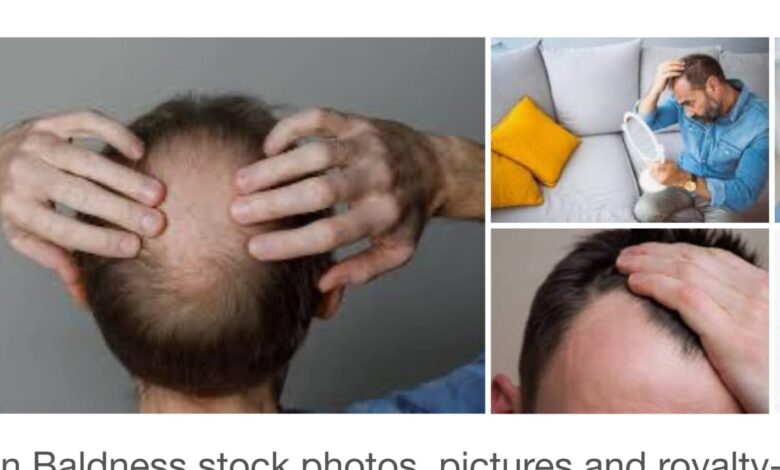
Androgenetic alopecia is the scientific name given to male-pattern baldness. Alopecia is the medical term for hair loss of any kind in men and women. Androgenetic, as the name implies, is any condition in men that has a genetic origin—andro—men, genetic—a genetically inherited disorder. So, male pattern baldness is just that, genetically inherited—if your father was bald, there’s an overwhelming possibility you’ll be bald, too.
Minoxidil is a nearly fifty year old drug developed for the treatment of high blood pressure. As an anti-hypertensive, it never reached mainstream use because it was found to be too potent for general use. So it was reserved for patients with severe high blood pressure or patients who failed to respond to anything else.
When minoxidil was prescribed, it was quickly noted that patients taking it developed excessive hair growth not only on the scalp but also in areas where it wasn’t wanted. So its use transitioned from HBP to hair growth. For years, it was available only in a topical preparation, Rogaine. To say it worked well and became the gold standard of treatment for male-pattern baldness would be a gross exaggeration. It grew “peach fuzz” hair and, in my opinion, was a thoroughly disappointing drug. It never became the drug it was reputed to be.
In more recent years, minoxidil has become available in a low-dose, oral formulation that has been very effective for hair growth. A low-dose formulation avoids the menacing side effects that placed minoxidil in a rarely-prescribed category while it measurably increased “hair density” and “hair diameter.”
A study published in the Journal of the American Academy of Dermatology in April, showed that low-dose oral minoxidil enhanced hair growth in men and women. The subjects mean age was 42.4 years, and they were observed for 5 years. The hair density (hairs per square cm) and diameter of strands of hair were measured at baseline and after 5 years of low-dose oral minoxidil.
“The mean hair density increased significantly from baseline.”
16.1 hairs/sq cm to 19.0 hairs/sq cm at 12-36 months
“Mean hair diameter improved significantly from baseline at 3-6 months but declined thereafter.”
Conclusion: Low-dose oral minoxidil is associated with initial hair density increases that over time stabilize. Hair diameter demonstrated early gains by 3-6 months, but dropped during the 12-36 month period. Low-dose oral minoxidil “may enhance hair density and diameter in Androgenetic alopecia patients within 3-6 months, but stabilize thereafter.” The success of this drug depends in large part on whether hair follicles are present on the scalp. No follicles means no, or poor, response to minoxidil. If hair follicles remain in the scalp, minoxidil will stimulate regeneration of follicles and increases denser and thicker hair strands, especially at 3-6 months.
References: Lolli F, at al. Androgenetic alopecia: a Review. Endocrine 2017 July;57(1)9-17.
Mukherherjee G. Low-Dose Oral Minoxidil: Hair growth may peak after 6 months, review suggests Medscape 2026 April 18.
Low-dose Oral Minoxidil (Loniten). American Hair Loss Association.