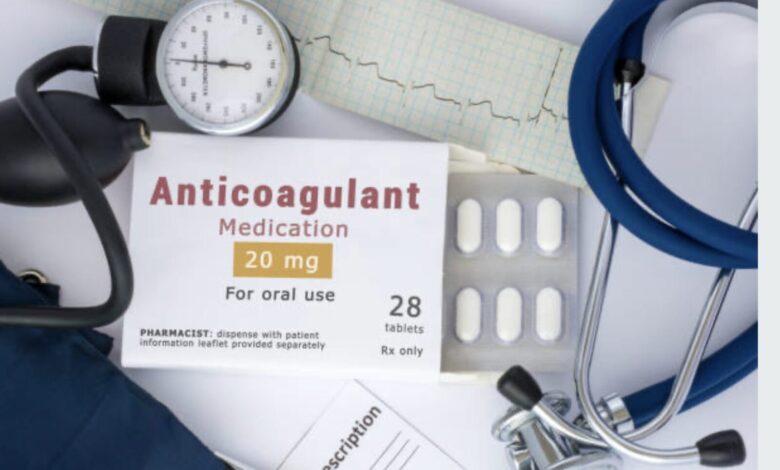
Direct Oral Anticoagulants are a fairly new class of drugs used for the prevention of blood clots and subsequent strokes in patients with atrial fibrillation. Unlike warfarin, a blood thinner in use for many decades, DOAC’s don’t require burdensome monthly blood test monitoring and one dose is good for all patients. They’re also alleged to have a lower risk of bleeding than warfarin. But this “lower risk” is offset by the age of the patient.
DOAC’s are “well-suited for older patients….who require anti-coagulation for atrial fibrillation.” But as mentioned above, the risk of major hemorrhage increases with age. Eighty years seems to be the age after which the risk increases. To help identify the patients at highest risk, several risk assessment scales have been devised. Some of these older scales use a large number of “predictor” criteria and are thus cumbersome to use requiring data that are burdensome to acquire. Some of the factors used are age (of course), anemia, low albumin, use of a certain anti-arrhythmia drug, and compromised kidney function. From all this data, a risk score is obtained. The higher the score, the greater the likelihood of bleeding.
Currently, there are three DOAC’s on the market—Eliquis (apixaban), Pradaxa (dabigatran), and Xarelto (rivaroxaban). My wife took Eliquis for atrial fibrillation. At age 73 she had surgery to replace her knee joint, and after, she had spontaneous bleeding into the knee joint three times, significantly delaying her recovery. Stopping Eliquis and switching to warfarin solved the problem.
These risk score scales mentioned in my reference are sometimes hard to validate (be sure they are accurate). But they are accurate enough to be useful. With warfarin, doctors and patients have the INR blood test to assess risk based on the range of the result. An INR can be done anytime with instant results available by fingerstick testing. If the INR is between 2.0 and 3.0, the risk of major bleeding is low.
Dr. G’s Opinion: I’m not convinced DOAC’s are any better than tried and true warfarin. Figuring a bleeding risk score involves blood work and referring to a chart with five data categories. An INR result takes 2 minutes at the most and it can be done as often as one is comfortable with. My clinical experience with DOAC’s has been all negative; with warfarin it has been all positive. I am not a DOAC advocate for those reasons and because they are costly. With Medicare part D warfarin is free. Marketing has made DOAC’s more desirable among some, but I’m not one of them.
Reference: Ebell M. Bleeding Risk in Patients 80 Years and Older Taking a Direct Oral Anticoagulant. Am Fam Phys 2026 March;113(3):285-286.