Ever since the Human Papilloma Virus (HPV) was determined to be the cause of cancer of the uterine cervix, screening recommendations for cervical cancer have changed dramatically. For the decades of the 1960’s, ‘70’s, ‘80’s, and ‘90’s, and up until about 2010, a yearly Papinicolau smear, or Pap test, was the screening test of choice. Once every year, a young woman made the dreaded visit to her doctor’s office for the embarrassing, and sometimes uncomfortable pelvic exam and Pap smear. The recommendation at that time was, for sexually-active women, regardless of age, to have PAP testing once a year.
In the late 1990’s, proof of HPV as the cause of cervical cancer was well-established. The recommendation then became annual PAP testing plus the screening test for HPV. However, HPV screening was done every three years, not yearly, and was only done for women 30 years and older.
The discovery of HPV as the causative factor in cervical cancer placed the disease in the sexually transmitted infection (STI) category. That had always been suspected because prostitutes had a high incidence of cervical cancer while among celibate nuns, it did not exist. Cancer of the cervix is the 4th most common cancer in women, and is predicted to cause over 4300 deaths, annually. In 2022, there were 660,000 new cases of cervical cancer. So, it’s not insignificant to feel the importance of early detection and the many lives it saves.
The American Cancer Society (the ACS) and the United States Preventive Services Task Force (USPSTF) are at odds with one another over their recommendations for screening. The ultra-conservative, cost-effectiveness-Obsessed USPSTF is mired in the 1990’s recommending only Pap Smears from age 21-30. From 30-65, they recommend HPV screening every 5 years or “cotesting ” with HPV test plus a PAP smear. The ACS Recommends HPV testing every 5 years beginning at age 25. “Cotesting” with PAP smear every 3 years is also an option. Both entities recommend ending cervical cancer screening at age 65.
The biggest changes in screening are total reliance on HVP testing every 5 years and either skipping PAP testing or reducing its frequency to every three years. Another change is not starting screening until age 25 instead of beginning once a woman is sexually active.
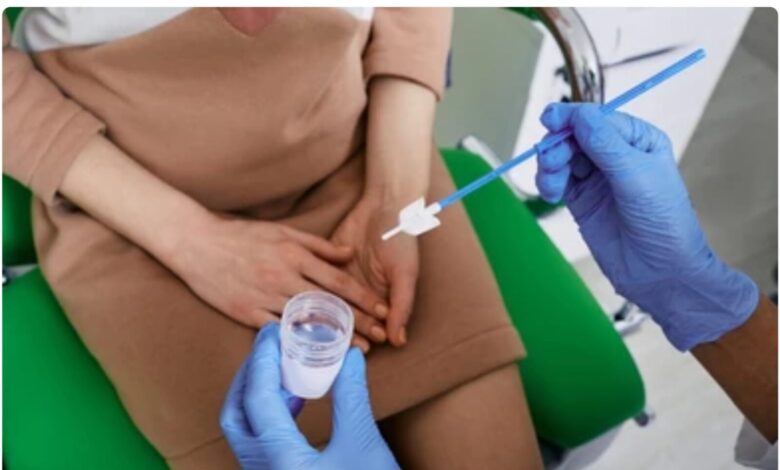
“Self-collected” HPV tests are available now, too. The patient collects the vaginal specimen using a special brush or swab, places the specimen in a preservative solution, and that is sent to the lab. If the test is positive, the patient must return for a PAP smear. Subsequent evaluation for positive HPV and PAP testing includes colposcopy with biopsy and definitive management based on results.
In summary, three types of screening tests are done:
Cytology—PAP Smear
Cotesting—PAP Smear and HPV Test
HPV Testing
Screening begins later at age 25 and goes until age 65.
HPV testing is the current preferred primary screening test.
The frequency of screening is reduced to every 3 years for PAP’s and every 5 years for HPV testing.
Self-collected specimens for HPV testing are becoming more common and preferred.
So, the “dreaded annual” is a thing of the past. Cervical cancer may become a thing of the past, too, because of the discovery of Gardasil, the HPV Vaccine. It is yet to be determined if eradication of cervical cancer will come to fruition, but it certainly will reduce the number new cases and deaths from the disease.
Reference: Wiser A, Quinlan JD. Cervical Cancer Screening. Am Fam Phys.2026 February;113(2):137-144.