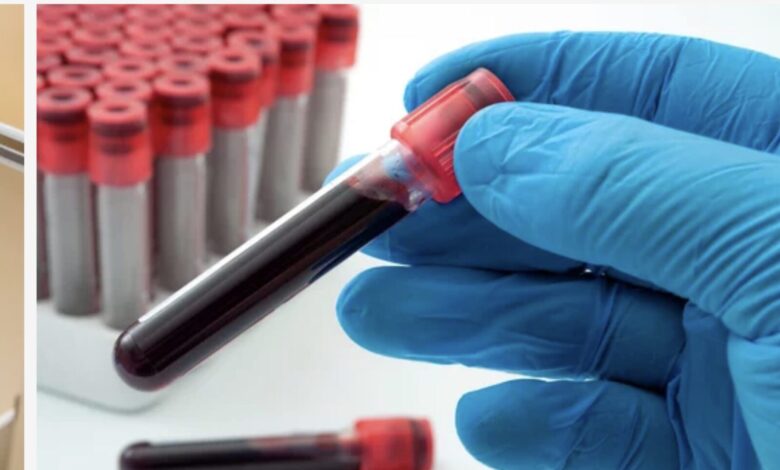
The information I’m about to present is a big deal in my opinion. To think there might be (or actually is) a blood test(s) that can predict if a person is at higher than normal risk of having major adverse cardiovascular events (MACE), is a very worthwhile discovery.
On September 9, 2026, the Journal of the American Heart Association published the results of a study led by a Spanish researcher in which 5328 patients with a mean age of 69, and 57% women were investigated to see if three specific blood tests could predict the occurrence of Major Adverse Cardiovascular Events (MACE)—heart attack, stroke, carotid or peripheral vascular disease. One of these three tests, the high sensitivity C-Reactive Protein (hsCRP), is a well-established inflammatory marker/predictor on which doctors have relied for decades.
The other two tests are names with which I am familiar, but my knowledge of them is far less than that of hsCRP. They are two plasma proteins, haptoglobin and Immunoglobulin A2.
The patients in the study all were free of cardiovascular symptoms. To get a baseline feel for the presence of arteriosclerosis, each patient had a carotid ultrasound to assess the amount of plaque present in their carotids and a CT to quantify the amount of coronary artery calcium each patient had. At the same time, immunoassay testing was done to measure levels of haptoglobin and Immunoglobulin A2 (IgA2), two plasma proteins. Haptoglobin is a marker for a type of anemia caused by the breakdown, or death, (hemolysis) of red blood cells. IgA2 is an immunoglobulin involved in the body’s immune system response.
In the study, for a median follow-up of 4.6 years, MACE, Major Adverse Cardiovascular Events, were documented in 466 patients, or 8.8% of the participants. The results of analysis revealed that higher levels of haptoglobin and IgA2 were associated with a greater “burden” of carotid artery plaque and coronary calcium. Combining hsCRP with haptoglobin and IgA2, the correlation between the blood work and imaging studies was even greater.
A haptoglobin level > 1.3 g/L and an IgA2 of >380 mg/L correlated with MACE at more than twice the normal rate. The practical aspect of this is that it could be employed in any preventive medicine evaluation. These three markers have a place in determining inflammatory risk and are predictive of MACE in the future. They can be used to tailor preventive medicine strategies in high risk patients. These tests, when abnormal, alert the doctor to be extra vigilant and more aggressive in treating these patients because of their two-fold risk of MACE.
References: Garcia-Alvarez A, etal. Haptoglobin and Immunoglobulin A2 Predict Cardiovascular Risk in Asymptomatic Patients J Am Heart Assoc 2026 Sept 9; 15(18):1-11.