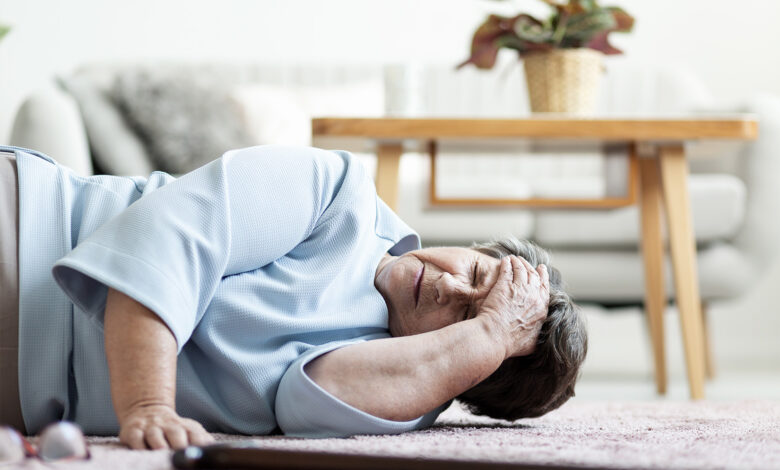
Nursing homes are filled with old people living there after suffering a fall. Falling has serious consequences especially if you’re a frail 85 year old with macular degeneration, diabetes, and take a boat load of medications. The fall is a concern, of course, but so is what happens to the individual after falling. It’s the end result that affects the patient’s longevity and quality of life.
Statistics on falling say that one third of people aged 65-80 on average fall once a year. When people get past 80 years old that percentage increases to 50%. So, half of all elderly Americans fall at least once a year. Of course, there are many others who fall more often, and these folks pose a very difficult challenge for caregivers.
Elderly folks have numerous comorbidities, other disorders that increase their susceptibility to falling. Diabetes, stroke, dementia, Parkinson’s disease, vision problems, arthritis, neuropathy, and learning disabilities are some of those comorbid states.
When a person meets the criteria for being a fall risk, a “comprehensive fall assessment” by an occupational therapist is the first step in evaluating the problem. This includes a thorough history and physical, a strength, balance, and coordination evaluation, vision and hearing testing, a review of medications, evaluation for cognition and mood, a test for orthostatic hypotension, and an exercise assessment.
After that, a home hazard assessment is done to evaluate the environment in which the patient lives and assesses items that increase risk and suggest others that reduce risk. Recommendations are made to remove throw rugs, install grab bars, remove loose impediments and level uneven surfaces to prevent tripping and falling, and provide assistance. Once the home assessment is complete, the preventive recommendations are implemented.
In addition, prescribing an exercise program attuned to the patient’s needs and abilities is helpful. “Exercise does not help the risk of falls, but it does reduce the rate of falls.” There is “still a chance of falling, but the number of falls is less” after exercising.
By reducing risk factors and having a safe home environment, a patient has the best chance of avoiding the hip fracture or head injury that lands them in the hospital and starts the downward spiral toward long term care and eventual premature death. These can be avoided by full risk assessment, reduction of those risks, and modification of their environment to improve safety.
References: Nelson M, Lai A, Harding M. Fall Prevention in Older Adults: Updated Guidelines from National Institute for Care and Excellence (NICE). Am Fam Phys 2026 June;113(6):608-610.
DrGOpines.com “Falls in the Elderly”
DrGOpines.com “Preventing Falls” 2025 September 2.