Autism does seem to be present more often today than it was forty years ago. I can’t recall any of my elementary school classmates in the 1950’s who had it or were even suspected of it. There was a boy named Bobby in my first grade reading group who was definitely different than the rest of us. He had peculiar facial mannerisms, had very poor speech patterns, and couldn’t learn to read. About halfway through the first semester, he was removed from the class never to be seen again. When I asked my mother about him, she said he was a little retarded (the vernacular of the 1950’s) and was put in a special class. Could he have been autistic? Yes, it’s possible, but his abnormalities were never given a name.
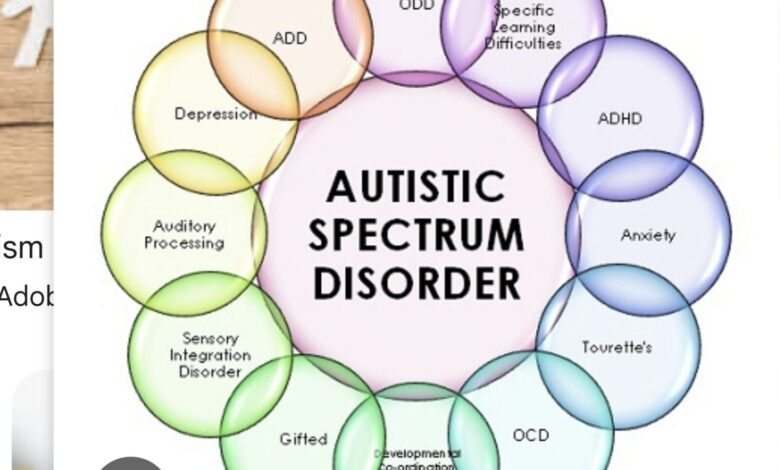
Autism is one of seven neurodevelopmental disorders. It is included, then, in the same general category as “intellectual developmental disorders, communication disorders, attention-deficit hyperactivity disorder, learning disorders, motor disorders, and tic disorders.” In each of these disorders, patients have “persistent deficits in social communication and social interaction, plus restricted and repetitive patterns of behavior, interests, and activities.” These deficits appear early in life during the developmental period and “significantly impair social and occupational functioning.” These patients are unable to use non-verbal cues (eye contact, gestures, facial expressions, and body language) plus their spoken language is inappropriate and socially unacceptable. Interpersonal relationships are very difficult for them to initiate and sustain.
Because of the breadth of the autism spectrum disorders (ASD), more and more children are being included in the category to the point that today 1 in 60 children is considered autistic. That translates to a world-wide prevalence of 1% of the population. The prevalence of autism spectrum disorder has “increased dramatically over the last 40 years.” For uncertain reasons, an “estimated 75% of autistic people are male. The majority….do not have intellectual disability.” Autism is a “clinical diagnosis” meaning it is diagnosed by a set of criteria and observations, not by blood testing, imaging tests, or biopsy. The increase in prevalence of ASD can be explained by several factors. They are:
- There has been a broadening of the diagnostic criteria for ASD availing the population of more opportunities to be called autistic.
- Doctors are better at detecting cases and recognizing the disorder.
- New methods of diagnosing ASD make it more easy to detect.
- A significant expansion of opportunities to diagnose autism has meant a great increase in numbers identified as autistic.
- Geographic location suggests social and environmental factors affect the frequency of occurrence.
ASD is a disorder that occurs in high-income communities in 86.5% of cases. Only 20% of the world population live in high-income communities. This factor may solely be caused by the lack of available diagnostic services and the low intellectual capability to recognize a problem. I also think the threshold of suspicion for ASD is much lower than in the past, and thus patients are called autistic who really may not be. They get mis-classified. “In the latest CDC survey of epidemiological data, the prevalence of ASD in California reached 4.5% because of high rates of referral to autism diagnostic centers among school-age children.” Many of these referrals were “false positives” after evaluation.
Since diagnosing ASD, and all its variations, despite having objective criteria, is very subjective, I think more often the tendency is toward calling a child autistic rather than something else. This will obviously increase prevalence statistics and concerns about over diagnosis. But the fact remains; that child had problems that prompted a referral to an autism diagnostic center. He still had issues that perhaps were labeled incorrectly skewing the data. I can’t say that actually occurs, but it has to.
Eventually, someone will answer the question,”What causes autism?” Cases will then be labeled accurately or better yet, finding the cause will eliminate the disorder, or reduce its prevalence, altogether.
References: Olson L, Bishop S, Thurm A. Differential Diagnosis of Autism and Other Neurodevelopmental Disorders. Ped Clin North Am 2024 Jan 5;71(2):157-177.
Fombonne E. Editorial: Is Autism Overdiagnosed? J Child Psychiatry Psychology 2023;64(5):711-714.
Styles M, et al. Risk factors, diagnosis, prognosis, and treatment of autism. Frontiers in Bioscience, Landmark 25; 2020 June 1:1682-1717.